The One Without a Clever Title

It wasn’t supposed to be this way.

This was supposed to be a graduation shout-out at the end of May. But last Thursday, life as we knew it came to an abrupt standstill, and now it’s a mid-March, rainy Tuesday tribute to my youngest instead.

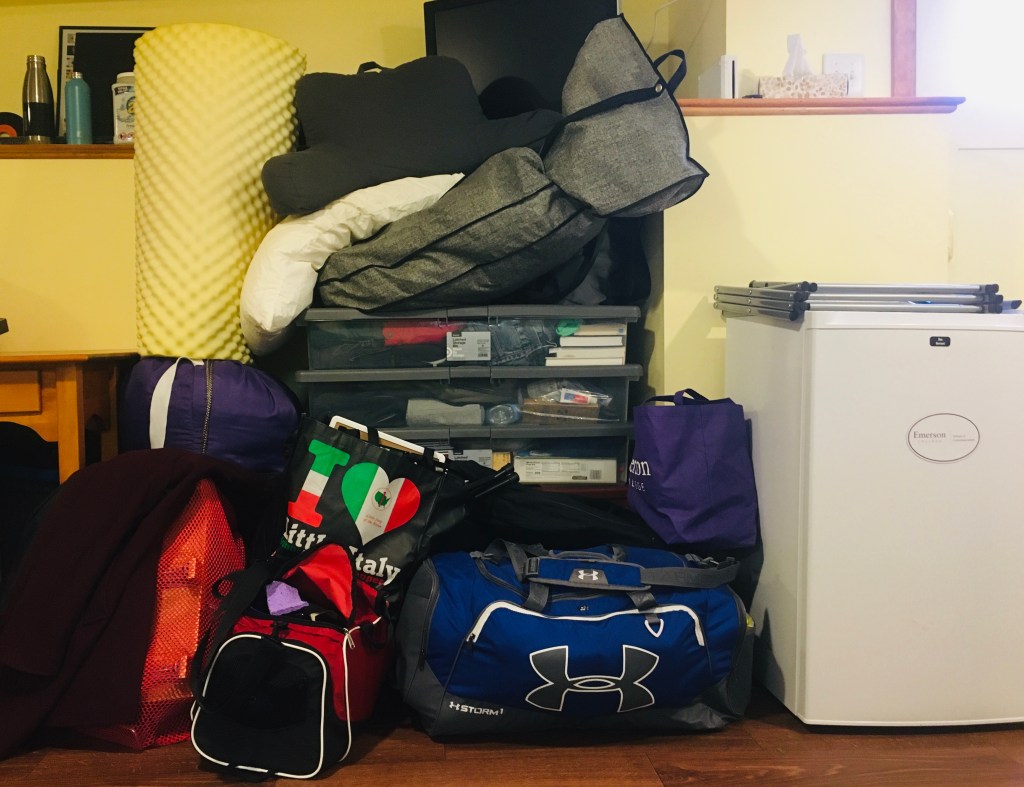
I’ve never met a kid who loved his high school more than my son. From the pro/con list he made the first time he set foot on campus (13-year-old boy pros: beautiful campus, good donuts, unlimited milk) to the day we moved him into his dorm, GS was where he belonged. He wasn’t even a little nervous, although he did express concern at the fact he would be attending a Quaker school and the only thing he knew about Quakers was that they wore funny hats and were pictured on oatmeal boxes.

I had to attend every single soccer game freshman year to see him. He had such FOMO that I couldn’t even bribe him with dinner to leave campus, although sometimes he’d counter my offer with an invitation to join him in the dining hall. He threw himself into every activity he could—tour guide, live music weekend, dorm treasurer, hottest freshman boy (the latter came from another parent, not him). When he finally did come home on fall break, he sweet-talked me into doing his mountains of laundry with a huge hug and the World’s Best Laundry Folder crown, and I was more than happy to do what I needed to keep my title.

The summer after his freshman year, we told our kids we were divorcing, and the look on his face nearly killed me. The next morning, he said that it was a good thing he’d gone through peer counseling training because now he knew how to deal with his family being in shambles.

It wasn’t supposed to be this way. 

His academic grades weren’t always what I (or he) would have liked, but he excelled in his art and woodworking classes. Yet without fail, every trimester his report card had multiple nominations to the Head of School list. Knowing his teachers, dorm parents, and coaches recognized his kindness, leadership, and love for his school helped overcome any GPA misgivings. 

When he was 16, he was stranded alone overnight in the Denver airport. He called me the next morning to tell me that he’d found Chick-fil-A and a charging station, that he’d gotten to travel to a new state, and that he’d ridden the escalators the wrong way because there was no one to yell at him. I learned a lot about perspective that day.

He was chosen to be a prefect his senior year, and spent hours planning his room and the bonus room where his prefectees would gather. He ordered an entire wall of photos and couldn’t wait to show me which ones he’d chosen. He loved going to Costco to pick out the best snacks for the kids who would come to play video games and hang out after study hall and on weekends.

It wasn’t supposed to be this way. 

Last Thanksgiving, I woke up to a lengthy text about what a great mom I am, and how much he appreciated me. I cried in the bathroom that morning, and then cried again when he told me he’d sent similar texts to 22 other beloved friends, family members, and adults in his life. 

When my grandmother passed away last December, he had to miss the final few days of school before Christmas break. He asked if I could give him an extra day to say goodbye to his friends, knowing he wouldn’t see them again until after the holidays. He spent a long time in the dean’s office that day, discussing life and death and family and other things he wasn’t ready to share with me.

It wasn’t supposed to be this way.

In February, we went to rent a tux for the upcoming prom. He somehow convinced me that buying a custom tux and suit would be a good long-term investment because he had finished growing. A very patient salesman spent more than two hours with us as my son painstakingly chose the style, fabrics, and taglines on the inner jacket labels. He was so happy to finally own pants that fit his 6’2”, 160 pound frame perfectly.

He swung between JV and Varsity lacrosse his freshman year. It was the first time in 10 years of playing sports there were conflicts with his graduating sister’s game schedule, but he reassured me it was okay to go to her games because he still had three seasons left. He filled out the team captain application as a junior and while he was sad not to be chosen, he knew he still had one more year. I couldn’t have been prouder when I saw Captain next to his name on the roster last week.

When he learned his spring break service trip to South Africa was canceled two days before he was supposed to leave, he declared that although he was really disappointed, now he had time to catch up on sleep and work on a new Instagram account for his art.

It wasn’t supposed to be this way.

Last Thursday evening, he came downstairs to let me read an email from the Headmaster that the rest of the 2019-20 academic year would be held online. Senior portraits, lacrosse season, and college sweatshirt day all vanished in less time than it took to say Coronavirus. Prom and graduation are TBD, but even if they do happen, with students all over the US and abroad, it is unlikely he will get to say goodbye to many of his friends before they head off to college this fall. As the person who has protected him more fiercely than anyone over the last 18+ years, my heart broke for all the long-awaited milestones that he’d miss out on.

Sixteen hours after the school email came, he walked into the kitchen and announced that his worst fear—homeschooling—had finally come true the last three months of his senior year. And in the midst of all the uncertainty, heartbreak, and tears, I laughed–hard–and knew he’d be okay.

Underlying Conditions

By Allyson Wuerth

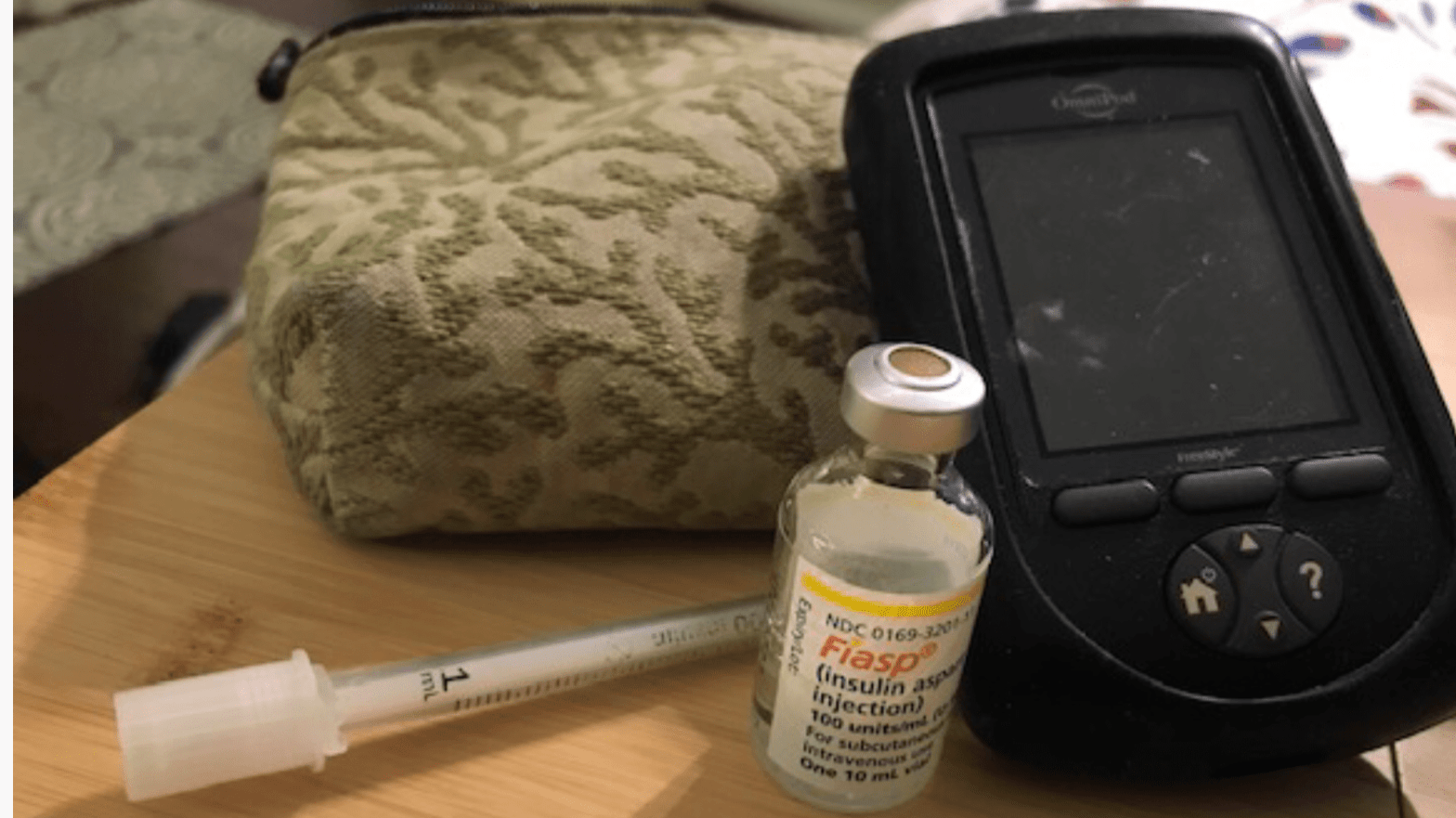
So, you wouldn’t know by looking at me, but I’m one of those “high-risk” individuals with “underlying conditions,” one of those unfortunate groups likely to become seriously ill if they contract COVID-19. I’m 42, I exercise regularly, I eat pretty well, and, oh yeah. . .I have type 1 Diabetes, also incorrectly known as “juvenile diabetes.” This means my pancreas suddenly stopped producing insulin, and it didn’t matter how old I was, or how much I did or didn’t exercise or eat. It means that my small intestine spends all its days cradling a dead organ, like a grieving mother whale carrying her dead baby across the sea again and again, hoping maybe one more good push and it would heal within the magic of all that water.

But instead, the pancreas remains unresponsive, shrivels up like one of those jarred baby shark souvenirs. Remember those? The ones that stared back at you like pickled rag dolls in blue water? I haven’t actually seen it, my pancreas. But since becoming diabetic, I’ve always imagined the organ inside me like this, all slick and puckered.

I was diagnosed at age 25, and it took almost dying for doctors to diagnose me. . .because children get type 1 diabetes, not 25 year old women. It was easier for them to believe I’d developed diabetes when they found out that my father was also a type 1 diabetic. Of course, I only know this second hand, as I was unconscious and unknowingly suffering from a diabetic complication called ketoacidosis, which is often triggered by illness or infection. If the body does not get the insulin it needs, it will begin turning fat into fuel. Acids clog the blood and the body simultaneously shrinks in size and bloats in confusion and disorientation. The body tries to die, is actively dying, but you’re too gauzy-brained to notice. Ketoacidosis is why illnesses like the flu or Coronavirus make me panic. I’m one of the people who needs to be vigilant despite the slim-chance statistics that apply to most everyone else my age. Keto Week ‘03 flashbacks are enough to make me rage when sick colleagues or sick students come into school. Remember, your “little fever” could be a near death experience or worse  for the immuno-compromised. I didn’t fight my way back so ketoacidosis could try and ruin me again.

After four days in the ICU, I was transferred to a regular room where I had to practice injecting oranges with saline, and then finally myself (the orange) with insulin (the saline) before I could go home. It’s silly now, but at the time I thought I’d rather die than stick a needle in my own stomach. And as insulin dripped off the tip of the syringe, I thought, this is exactly the smell of the blue bath.

My father’s bathroom in the house where I grew up was hideously blue. Seventies-made sky blue-tiled walls and a matching toilet,  blue floral wallpaper, even a blue tulip-shaped plastic trash bin where my father dropped used alcohol pads, over-used syringes, blood speckled cotton balls—the scraps of diabetes. I’d sit on my mom’s side of their bed and tell him about my day as he took his evening dose of insulin with the blue bathroom door opened just a crack so he could hear me. Through the crack, I could see him with his shirt off, plunging a syringe deep into the subcutaneous fat of his abdomen. And that smell that I always imagined was just the smell of the blue bath, was actually the sting of insulin. I have no idea why, but the moment in the hospital when I connected these two smells, was one of the first and last moments I’ve ever felt true self-pity. Diabetes had always been a part of my life—that smell contained its permanence, its vice grip over the many rooms of my life. Spaces I hadn’t even seen yet. Doorways with walls I couldn’t begin to imagine.

Would this illness wreck my life? Would my future be all Julia Roberts tearing out her freshly coiffed hair, orange juice staining her wedding dress? Would I die on the floor of my kitchen surrounded by boiling pots of pasta and my screaming toddler? Would I even have a baby at all? After all, that’s what killed Shelby in Steel Magnolias. They warned her not to have a baby (Later my fiancé, who is now my husband, told me the first words I spoke to the nurse when I regained consciousness were: “Can I still have kids?”). Spoiler alert: We have two amazing and healthy children, though they challenged my body in ways my pre-diabetic self never could’ve imagined.

Alone in my room, I wonder what this virus will mean to me in two weeks, a month, a year. Will it spare my family? My 70yr old, diabetic father? Myself?

Alongside all these ‘what ifs’, I also know I must be vigilant. This means doing my best to keep my blood sugar within a normal range. Too high and I’ll be more susceptible to an illness like COVID-19. Too low and I could put myself in immediate danger of passing out. The line is fine and difficult to navigate, dependent on so many variables. It’s not just food that affects blood sugar; one also must consider hormonal shifts, stress, exercise, fatigue, temperature, etc. Any one of these variables and 20 minutes time could find you and your oh-so-confident-I-can-drive-with-a-blood-sugar-of-175 self  in a fugue state in the Kohl’s parking lot with a blood sugar of 13 and your five month old baby in the backseat. And no matter how many times you crunch the numbers, you’ll never know where you went wrong, though your OB will suspect nursing is the culprit and urge you to consider formula.

These variables were my first thought when I got a call last Thursday night that my school would close indefinitely due to the spreading Coronavirus. Before I put my phone down, I thought about the number of steps I usually take by 9:36am on a school morning (nearly 3000) and how my insulin needs would change if I cut those steps in half or ¾ even. Do I change my basal rate in my insulin pump now or do I wait and see how things go? If I wait, how many days do I let my blood sugar remain in a higher range before I put myself at risk for infection? Is this when the virus will get me? The questions overwhelm me.

But instead, I pick up my phone and text some colleagues—“God, I knew I should’ve brought those mask projects home to grade. What the hell was I thinking?”


Do the Shoes Make the Life?

This month I had nothing to write about.

Well, maybe that isn’t exactly true. Topics swirled in my brain but none seemed quite appropriate to write about. The current political primaries would be too divisive and personal. Bernie vs Biden vs Why Not Warren? A few former students have a sense of where I fall on the political spectrum and I wasn’t about to get into that mix. Then I considered anything to do with my religious/spiritual journey since motherhood. Again, no way. Heretical and traditional at the same time – nobody wants to read about that mess, and most would get offended at some point. Moving on. Then I considered something close to my heart: the way that mothers sometimes do not support other mothers and quickly deleted that in my head before it even took a phantom shape of an essay. Finally, I realized my Momma brain is currently too fatigued, worried, and occupied with some weird virus thing-y to focus at 11pm. But no one wants to hear about my hypochondriac brain freeze.

So. What to do? What could I share and write about?

My eyes glanced down at the magazine on the couch and the movies in my Amazon cue. My own very private survival, keep-your-sanity kit. How do I negotiate the mess in my head and heart that I just described above? Well, here goes.

My mother and I subscribe to and swap Victoria, Country Living and Southern Living magazines. (I hear some of you starting to scroll away from this page. Bear with me.) Of all three, Victoria is probably closest to my literary and intellectual preferences – tea settings, English cottages, book rooms, gardens. This magazine is a favorite portal to a calmer, prettier, more intellectual perhaps made-up world. Now, Country Living and Southern Living. I stumbled upon these and guess what? They are fun. I am not about to redo my house in some Low Country style. We don’t have a front porch to paint light blue. My cooking skills would never allow me to replicate those recipes. And I will NEVER look like a Southern belle with the huge bouncy hair, perfect manicures, and lipstick for every occasion. My nails are bitten to the quick, my Yankee hair has had one side part since my junior year in high school, and these days I can’t even keep track of my chapstick. But these magazines allow me to imagine living in a world so unlike my own and at the same time, give me a tip or two to maybe, just maybe, organize my house or myself one degree neater or stylishly….this afternoon, or…someday.

Then I looked up at my movie cue. Recently, I have returned to a plethora of movies made at the peak of “good movies” between 1999 and 2006. These were the movies that got me through my 20s – while I was trying to figure out where I was going, what my life was going to be about. The favorites were Tortilla Soup, Monsoon Wedding, Tango, Chocolat, Under the Tuscan Sun, Bridget Jones’ Diary, The Devil Wears Prada, you get the picture. I realize now they share one thing in common – a young heroine trying to find her voice and herself in the midst of life’s challenges, all while looking trim, stylish and vibrant. And usually wearing really great shoes.

At the time, the very beginning years of the 21st century, these movies were touted as having “strong female characters”. As I re-watch them now as part of my late-night sanity restoration, I wonder how many of them hold up to the feminist standards of our time. I suspect most fail miserably. In the age of #metoo and a woke sense of checking your privilege, most of these heroines succeed partly for using and manipulating their sexuality (as defined by the male gaze) and by living and using whatever privileges they have (as defined by a narrative primarily comprised of a Northern White gaze.)

But here’s the thing. These ladies were all striving to live something we now call #bestlife. How many of us say we are “living our best life”? What does that even mean? Is it up to each of us to define it, or is there a subtle underlying unifying definition? I get the sense that it means ‘I am doing the best version of “me” which implies some sort of post-modern feminist freedom, expression of creativity and sexuality, and ability to do what I want to make myself feel good when I feel like doing it.’

How far have we really come?

The irony to me is that sometimes living your best life in fact means invoking those very privileges we are trying to check everywhere else. And it all leaves me a little confused.

What I do know is that at 11pm, as I fight the urge for my Momma Wine 0’clock or food o’clock, as I avoid any more news before bed and pick my early 2000’s nostaglic feel good movie, I feel neither trim, stylish or vibrant. There are days I want that Girl back so badly. The freedom to swing my hips in really clicky shoes and appropriated ethic prints down the streets in New Haven, grad backpack in tow. Hair full, lips colored, mind engaged. I remember her so vividly. But she was also a bit selfish, elitist, and ignorant. Was she living her best life? On my couch tonight, I do no purport to be woke or checking my privileges, and I don’t know at all if I am currently living my best life.

But I do know that I am living a messier life, and I am living a realer life. And I am living into a much more realer “Me”, even as I scan these magazines and movies. And in that messy realness, my feet have widened from Birks and sneakers, my face has wrinkled and softened a bit, and my heart has swelled. And my brain, well, she will stay engaged anyway she can these days, even if it means a late night walk down Nostalga Lane. I am living a life where I know to avoid more facebook comments, make more phone calls, pray a whole lot harder, and get over the little things that just don’t matter. And focus on the things that do.

As I don’t know if I am living my best life (according to facebook), I don’t know if this is my best essay. But in both, they are real, they are driven by love, and always, always in search for that perfect pair of shoes in whatever place/way of life I currently call my real home.

Only Kid

You know how kids can ask really honest even painful questions when they meet you? “Why do you only have one child?” “It must be so easy to only have one child.” “Don’t you feel bad about only having only one kid?”  Just kidding, these are actually unsolicited questions offered by grown people – you know, adults.  Maybe trying to be helpful, maybe just curious, maybe just being wildly inappropriate in a failed to learn to mind your own damn business sort of way? 

Do not, do not, do not search online for the impacts of “only childhood.”  Everything from “it ruined me” to “it made me the amazing person I am today.”  The same quotes could apply to chocolate.

The truth is I could only HAVE one child.  My body said enough (I used to say it “broke” but try not to go there anymore.)  It was not how I thought it would shake down.  Maybe I should have planned better?  Maybe I should have paid more attention in health class? Maybe I should not have waited until I was 37?  (The maybes and the should haves are infinite.)  The truth is after one miscarriage and a needed-hormone bump the writing was on the uterine wall.  Later a male Cruella de Vil who posed as a fertility doc did not ask what my goals were and merely said “you have one barely viable egg and are not even a candidate for IVF.”  Then he swooped his puppy-skin coat around him and told me to check out with the receptionist.  The walls on the clinic bathroom I cried in were mauve, the tiles were speckled beige, one fluorescent light was out.  These are the things you remember with vivid ferocity when you feel like a part of you died.  Because that’s what many women faced with the “end of fertility” or “uncooperative fertility” feel like. Like they are broken, not whole, less than.  It gets better because I soon found out I was in premature menopause but that is (spoiler alert!) ANOTHER blog post (oh lady peeps have I got stories for you.)

The truth is having a 2nd child was something we were not entirely sure of, but as my partner and I are each the oldest of 4 kids (yes, that does make for interesting couple dynamics, ANOTHER blog post) we know the power of siblings.  And to be honest, I wanted that choice.  Then it was gone.  For all those who want a child and struggle with fertility and are not as fortunate as I am to be able to write about my “only” child, my heart hurts for you.

My son, now 10, is indeed awesome and the best thing I have ever made.  Though my Laura Ingalls Wilder diorama of Little House in the Big Woods in the 4th grade was killer.  He is smart and goofy and a blend of me and his dad and our families and our neuroses and our amazing-ness.  He has friends (though boys and friendships is ANOTHER blog post) and plays well with others (and yes, he can roll with groups of adults better than some peers). He can mash up songs that make me laugh out loud and can do complex math in his head.  Do I worry about him being Spoiled? Selfish? Helpless? Yep.  Last time I checked, one prereq of being a parent is knowing how to worry well.

He has too many Legos, and we should volunteer more, and we should schedule more playdates (ANOTHER blog post) and, and, and – the maybes and the shouldhaves are infinite. My goal now is to be happy with what I have, try not to ruin my child, and possibly even find peace with the journey. I am human.  Sometimes I still follow (with my eyes) people with babies around in public spaces – I recently almost got lost in a holiday light maze when following a dad and his baby and toddler.

I have a lot of future blog posts.

Becoming Fearless

One of my college roommates passed away the week before Christmas. So did my grandmother. And oh, in the middle of that week, I had to have a biopsy because of a “suspicious” mammogram. (Thankfully, the girls are fine. PSA: Get yours checked.)

Not my most favorite week ever.

Then again, the last few years haven’t been my most favorite. My marriage of two decades ended, and both my kids moved into dorms in other states. I had to quit a job that I loved. The career path at my other job changed, and I lost the title I’d worked so hard to earn. We had to sell the house we built eight years ago, because it made no financial or logistical sense to keep a 3000 square foot house where I lived alone 75% of the time. And my hairdresser stopped doing hair.

But I digress.

Although I managed to keep my completely inappropriate sense of humor during this time (because God is a pretty funny guy), I was slowly, almost imperceptibly, losing myself. An unwelcome sense of hesitation and fear had begun to permeate the edges of my life. I became way too comfortable being alone, not because I necessarily enjoyed hanging out with a hot mess who should have bought stock in Kleenex, but because it was easier than having actual face-to-face conversations. Social media and texting became my main means of communication, because it was a lot easier to live life behind a screen. Don’t get me wrong—I still went out; I still did things. But I was gradually losing the parts of me that took risks, tried new things, and truly enjoyed life and all its craziness. I spent more days than I liked in survival mode, worried about what the future held. 

And then one Saturday last December, Rebecca passed away. While it wasn’t unexpected—she’d been battling stage 4 metastatic breast cancer for several years—it was sudden; the weekend before she passed away, she’d been making Christmas break plans with one of our other roommates. Reb was a neuropsychologist, and she’d quit her practice when she was diagnosed. But she wasn’t one to just sit around and wait to die. She started The Cancer Couch Foundation to raise funds for MBC labs, and raised over $3 million in four years. She and her husband built their dream home. She traveled. She made her stand-up comedy debut. And she did all of these things while being one of the smartest, kindest, funniest people I’ve ever met. She packed more into four years battling a terminal diagnosis than most people do in a lifetime. As a friend of mine said when she read Reb’s obituary, “No one will ever say half those things about me. I have some work to do.”

Don’t we all. 

The last time I saw Reb was at the beginning of October at the annual benefit concert she organized for The Cancer Couch. I had to force myself to drive the six-hour round trip—I’d cycled 150 miles that weekend—but it had been a while since I’d seen her. She looked beautiful. As always, she was the consummate hostess—she gave me a hug, asked how my ride had gone (and told me she still thought I was crazy), and said how grateful she was that I’d come. One of our other roommates later told me how sick she’d been that night, but you’d never have known it by looking at her. 

Ten weeks later she was gone.

The line at Reb’s viewing was over two hours long, and somehow, what should have been one of the saddest experiences of my life was one of the most uplifting ones. We reminisced, shared stories, and laughed at her crazy antics over the years. You see, that was Rebecca’s essence. She made you feel loved. She made you laugh until you cried. She made you want to be a better person. She made you want to try new things. She made you want to LIVE each day. 

She was fearless.

And that reminder could not have come at a more perfect time.

Stranger Danger?

By Allyson Wuerth

I can see it from my bay window, the black water of the pond. Leafless trees. The hawks funneling a dreary sky. I can see them too, my daughter and her friend. They’re just ten years old  and ensconced within this late December grey, two colorful blurs almost floating within the fog. 

Truth be told, I’m proud of myself for letting them go. I’m fiercely over-protective of my children, especially my daughter. And, of course, I blame my mother for all this. She was over-protective too, but in a 1980s sort of way—always warning me about “perverts.” She seemed to define that term broadly—perverts were strangers and strangers were men. They lied about who they were, why they’d come, where they were going. They could even disguise themselves to look like people in your family. Everything they wore had pockets. Why? Because they needed some place to hide all the things they would kill you with. She subjected me to constant lectures about how to handle myself in public places. They can be summed up by the following: 

  1. Don’t talk to strangers. (I became so paranoid, I hardly spoke to anyone.)
  2. Even if they tell you your parents are in the hospital, they’re lying. Don’t talk to them. (Wait. They could trick me like this?)
  3. There is never candy or kittens in the back of a grown man’s van. So don’t be dumb enough to look. (No candy. No kittens. No look. Got it.)
  4. You don’t want to end up like that Adam Walsh, do you? (I didn’t.)

But, like I said, it was the 80s, so for all this talk of strangers, perverts, and murderers, the incongruity of my freedom was just as true. Could she really have been that worried I’d be kidnapped? I can remember traipsing through the neighborhood alone from the time I was 4 or 5 years old, following the brook’s long trail to the reservoir off Great Hill, flipping off an el Camino full of teenagers, heading into a dark woods to find where the Mountain-laurel bloomed. 

Once, at the Milford Post Mall, I ran away from my mother in a store called Child World because she wouldn’t buy me a toy. I ran and ran, and when I finally stopped I saw nothing but unfamiliarities. A group of teen boys heckled me, and I burst into tears thinking for sure they’d murder me, put my body in a duffle bag, and roll my severed head into the Housatonic River. When my mother finally found me, she hugged me tight and said through gritted teeth, “I thought you were kidnapped. Don’t you ever do that to me again. Ever.” Then she slapped me hard across my face. If I really think about it, I can still feel the sting, like she had a palm made of bees. 

And, of course, I could never escape myself. At night, I agonized over the possibilities, believing that men carried around secret faces that looked like the faces of people I knew and trusted. That faces could be swapped like stickers or secrets.  I envisioned myself in the back of a van, peeking out that small bubble window, seeing everything I loved grow smaller, and smaller, and smaller. My blue house. My little brother. The cluster of oak trees I always climbed. My street. My bus stop. And all I could say was, don’t take me away from all this

For all her good intentions, my mother’s fears terrorized the bulk my childhood. Maybe she thought arming me with stories of murdered children was enough to keep me from harm? But you know what? All those stories of strangled and bagged children, they seeped through my already-thin-skin.  Instead of making me tougher, they huddled deep inside me like such dark clouds. Like all children, I was coated with the fierce belief in my own invincibility. I was able to semi-manage my kidnapper anxiety by believing this. But as I grew, my coating of invincibility faded, while the overwhelming fear basted within me. A decade later, my psychologist called it “panic disorder.” 

So, yeah, when my 10yr old asks to walk to the pond down the street from our house, my instinct is to say, “NO!  Absolutely NO!” 

    “No. What if there is a murderer hiding in the woods?” 

      “No. Do you even know how many episodes of My Favorite Murder mommy  has      listened to today?” (Four. The answer’s four.)

But I don’t say any of this. In fact, I let my girl and her friend walk to the pond without the baggage of this 80’s kid. Truthfully, I’ve only in passing mentioned the danger of strangers to my daughter. It just doesn’t seem worth. . .the risk. Anxiety is already in her blood. Does she really need one more thing to worry about? 

So, for now, she walks without the stories of vanished paperboys, girls last seen in a field of butterflies; she walks without squinting to find the hidden seams of a person’s face. I don’t think it’s fair to heap that burden, that whole terrible world, upon the consciousness of a child who, statistically speaking, will most likely never need to worry over it. Despite the panic I feel when my daughter walks 20 feet from our home, my head reminds me that stranger abductions are pretty damn rare. So maybe that’s a talk I can skip? I think, as parents, we try so hard to shield our own children from the mistakes and injustices we were exposed to—at least I do. And then I second guess myself, and wonder if I’m doing more harm than good. I suppose I’ll find out when my daughter writes her own blog post one day. 😉

Still, I could never allow my children the freedom I had in the 1980s. They don’t take long walks with their friends on summer nights (I tell myself it’s because we don’t have streetlights); they don’t walk to school-even if you can see it from my house (no sidewalks). So my eyes hover over these two little girls who have no idea how closely they are being observed. From my bay window, I watch them circle the pond over and over again. I wonder what it is that 10yr old girls talk about in the fog? One bends to pick up a twig and flings it into the water. The other plucks berries from a holly bush and holds out her palms. “Look here!” I imagine her saying as the other one pushes hair out of her eyes to see the pile of shiny husks. “Look what I found!” 

They are cupped in her palms, this handful of scarlet berries, the bright of them ephemeral as ladybugs or mysteries.


Finding My Piece

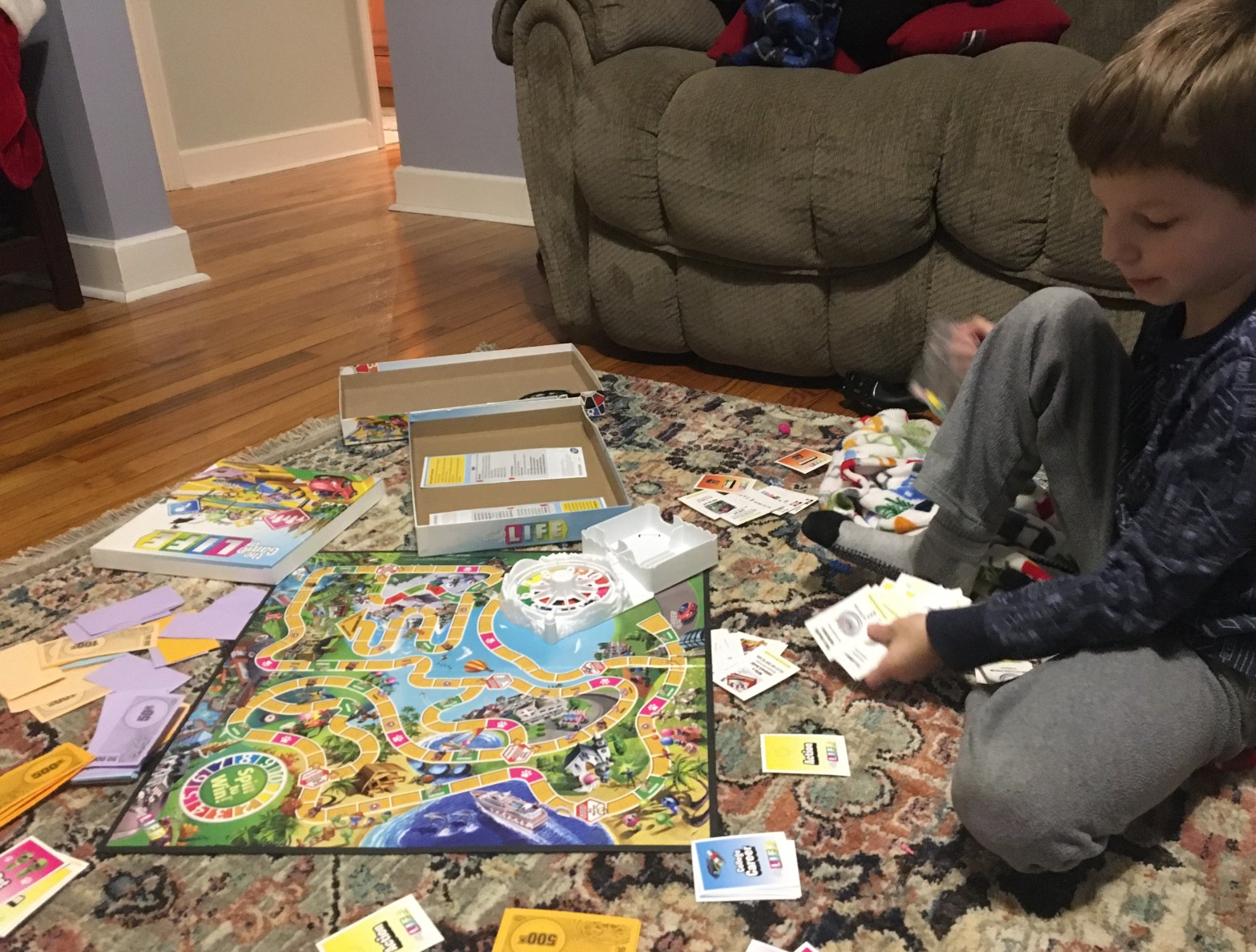
My family enjoys playing games.  We play board games, sporting games, card games, video games, and even some homemade games like Let’s See Who Can Hide in the Bathroom and Eat Chocolate Alone So the Kids Don’t Ask for Some.  Not to brag, but I actually think I’m getting pretty damn good at that one.

But it’s the truth, we love our games.  At least once a week, you’ll find my family sitting around the dining room table playing some kind of board game. My children are 6 and 8, prime board game ages, and whenever we play, we follow the rules. I’m not the kind of parent to let my kids win or to bend the rules to ease the blow of defeat. Sorry, kids. 

Above all though, my husband and I always take great pains to teach them that as long as you try your best, it’s okay to lose, but it’s never okay to cheat.  Sometimes you’ll win and sometimes you won’t. That’s life…

Usually I’m able to support their losses and wins, and do my best to model good sportsmanship whatever the results.  When we play Clue, I’ll throw out a “You paid careful attention to the evidence! Well done!”  When we play Jenga, I’ll hit them with the classic “That was a bold risk moving the corner block!”  When we play Skipbo, I’ll offer a “Smart use of your discard pile, kiddo!” When we play the Hide and Eat Chocolate game, I usually won’t say anything… save for an occasional cough to cover the sound of the wrapper.   

But there is one game that I sometimes just can’t seem to find the positivity for–the dreaded Game of Life.

A teacher making $100,000 right out of college?! Um, no. Collecting $20,000 from other players because it’s your pet’s birthday?! Who are we, the Hiltons? Inevitably, whenever we play Life, I morph from the mother able to find encouragement even in mistakes to the mother lecturing her children about how unrealistic each move we make is. 

Sure it would be great to retire with millions in the bank, as even the losers of Life seem to do, but as I’ve experienced it, life is a totally different kind of game. 

I want to see a card that says You put 2 children through daycare from infancy to preschool. Pay $150,000! Or You’re still paying off your own college loans, but it’s time to start saving for your children’s education. Move back 10 spaces! 

Please don’t misunderstand me. I love my life–and I’m willing to work hard for what our family has. I’m not waiting for the inheritance card to make some of my hardships disappear, and I don’t want my children to think that life works like that either. Yes, good fortune makes a difference, but more so than money, the true quality of one’s life comes from sources far less material. 

Therein lies my biggest problem with The Game of Life. It equates success purely with wealth, and that message–that money is king–is one we see far too often in our society.

While my children say that the objective of The Game of Life is silly because there are so many things that matter more than money in life, they still love to play it. Right now, at this stage of the parenting game, I’m satisfied knowing that my kids are able to see beyond the temptation of wealth, a temptation that I still wrestle with myself sometimes. 

It’s my hope that as my kids grow, they are able to remember some of the lessons we’ve learned through making our moves, accepting our losses, and celebrating our wins. And if they can get through the Game of Life with a smile on their face, I think that is a win in of itself.

A different kind of kid

I am someone who feels a lot of feelings. I am quick to cry, quick to laugh, quick to be honest about how I’m struggling or why I’m sad. My emotions are never guarded; I wouldn’t even know how to fake it if I tried.

So it came as quite a surprise nearly ten years ago when I gave birth to a human whom I lovingly say has a heart of stone, my fierce and fearless daughter Ella. While I am balling my eyes out watching Wonder at the town library, she is dying of embarrassment. While other kids are stressed about friends and school, she seems mostly oblivious to the anxieties of others. 

My younger daughter will tell me she loves me ten times a day and call out to me in the middle of the night just because she desperately needs a hug, but with Ella, we would probably go days without touching at all if I didn’t initiate it. When her little sister tries to hug her, she looks like a cat just waiting for the chance to scratch her captor and make a run for it. 

It has been a challenge to relate to a child so different from me, and I know that sometimes I push her too hard, forgetting that just because she doesn’t express her emotions as freely as I do doesn’t mean she doesn’t have them, and it doesn’t mean she doesn’t love me, or her dad, or her little sister. 

She just speaks a different love language. She won’t hug anyone in our house of her own volition, but she is quick to engage in a wrestling match with my husband. She rarely says I love you first but is quick to tell me I’m good at drawing or to compliment my hair. She, until recently, was afraid to take out her own earrings but trusted my hands to do it. She doesn’t want to snuggle, but every night she crawls into my bed and asks if we can listen to an audio book on my phone. 

And in some ways, I envy her emotional make up. While I wish she were more empathetic, like me, I see the benefit of what she lacks. While fear and insecurity imprisoned me for most of my childhood, Ella’s lack of either of those traits has enriched her life. At nine years old, she can snowboard down a black diamond one day and flip across the gymnastics mat the next. She wears fake glasses to school every day and makes her own clothes and couldn’t care less about what anyone thinks. She is completely herself all the time, and by the time I was in fourth grade, I’d already learned how to change myself in order to be liked. I am often critical of her lack of empathy, but I’m starting to realize that I have much to learn from her about not letting my emotions rule my life. There must be a balance between the two of us, a place where we can care for others but not spend our whole lives burdened by what others think. 

So much of parenting is an act of letting go of expectations, of accepting your children for who they are, not as reflections of you, but as their own unique expressions of humanity. Every day I am in awe of this athletic, creative, intelligent, strong girl that I made but who is not simply my creation, and I am learning to accept her for who she is, not who I imagined her to be. And as I do that, we grow closer together. 

And sometimes, when we’re lying in bed, listening to a wildly inappropriate YA dystopian novel that I know my tough girl isn’t too sensitive to handle, I reach my hand out to her in the dark, and she takes it. 

Parental Controls

Parental Controls

When we think about “Parental Controls” our minds jump to the kind of controls we might set for our kids regarding inappropriate content and exposure on the internet, gaming, phones, TV, etc.  I’m thinking more about another set of “Parental Controls” that may have a larger impact on our children long term that is harder to establish.  I’m talking about the influencers that creep into our decision making on just “how” to parent.  Things that we choose to exhibit while raising our children; what pieces of ourselves and our experiences we decide to share and use to guide our style and demeanor.

This other set of parental controls is a sticky wicket in my marriage in terms of what parenting styles we both choose to employ at times.  You see, my husband and I come from very different backgrounds in terms of our childhoods and parenting, or lack thereof.  We all grow up with different circumstances attached to us; financial, environmental, social, educational and so on.  How does one choose what to filter out or is it really even a choice?  I don’t write this out of any place of judgement because quite frankly, there are many ways of parenting, none of which I am here to say are right or wrong, just different and necessary depending on what tools you have in your toolbox.  So much of our decision making and how we conduct ourselves, albeit not surprising, comes from our own life experience and continuously evolves.  Let’s face it, you can seek enlightenment until the sun goes down, but our “instinct” is engrained and influenced greatly by our own experiences growing up.   This childhood vault spotlights what “tools” you have in your toolbox to assist with parenting.  This is turn, challenges us on the way in which we agree or disagree in raising our children.

In reality some, or maybe most of our tools are passed down to us throughout our own childhood, much like that coveted set of silver and family jewel or perhaps the not so coveted potpourri of end tables and ugly lamps.  Ultimately we come to parenting with this toolbox filled with a myriad of items; some tried and true, some crude, some that have seen better days, or perhaps, your toolbox is on the emptier side.  Sometimes you might wish you had a different tool but there was no one to help you find it.  Either way, when we decide to start a family, we often add some shiny new tools that we’ve read about or that our friends recommend.  So when co-parenting, one might think joining forces is awesome because now we have a plethora of tools, right?  Yes, but agreeing on which to use and how to use is where the angst comes to life. My favorite frequent flyer saying in our house is “I agree with your message but your delivery sucks”.  Message lost, end of story.

Let me shed some light on my life.  I live the glorious and messy family life of a blended, generational household which is awesome and hard and messy and beautiful and challenging as hell to ever know if you are doing any of it “right”.  I grew up in middle class suburbia in a typical, as they used to say, “nuclear family”.  Our family unit was made up of me along with my two brothers and my folks.  They were educated, hands on, hardworking and tried their best to model what they wanted us to learn and on occasion, things they probably DIDN’T want us to learn.  We weren’t wealthy but we didn’t want for much. We were loved, clean, full-bellied and generously clothed with both new and hand me down favorites.  We were afforded social and cultural opportunities.  Music lessons and recreational sports. We traveled places to visit family, participate in educational experiences and fall in love with nature in one of the most heavenly places on earth, the Adirondacks.  We were pushed to dream of our futures where college was the assumptive next step.  And then we were given a supportive boot when it was time to spread our wings.  We were taught to work hard, learn the value of a dollar.  We had love, validation and a strong sense of right and wrong.  We had arguments, blowouts and family meetings.  We were sent to our rooms and tough conversations weren’t hidden.  It was all there to sort through and use as a way to learn. All of it was bolstered with unconditional love.  It was hard but safe, supportive, shielded and privileged.  Family was and is everything.

My husband’s background was very different.  Couldn’t be farther from the picture I just painted.  He grew up rough and tumble in a city where the street corners were for dealing and exchanging favors.  His family was in the system. His mother uneducated and his father chose to walk away after his birth. He grew up in shitty, smoke filled apartments only to wonder about dinner and always looking over his shoulder trying to avoid beatings from the current father of the hour. He ended up in the system. Black trash bags dragged from place to place.  Some bad, some sort of ok but never ones with parents who opened their arms and treated him with love or respect.  He lived in perpetual survival mode.  He never had parental role models until he was almost out of high school and taken in by a family who gave him a glimpse of that and pushed him to want more for himself.  He started college and then chose the military- another form of living in survival mode.  All. The. Time.  So in short, because there is more than I cannot bear to write about, he was not raised with any kind of privilege. He was raised in clothes that didn’t fit, shoes with holes in them, sparse meals, showers snuck in at the school gym, no love, no trust nor safety.  No role models of what parents should look like, no unconditional love.  The military saved him.  It provided for him, gave him boundaries and rules, 3 squares and a semi consistent and safe place to lay his head at night.  Not without a price of course, but it was better than any other price he’d already paid.

So as we think about all of that, you can imagine both of our toolboxes look dramatically different from one another. Our parenting style discord comes in agreeing on what that looks like when you have such disparate upbringings.  Listening to each other and understanding each other is key, but this is where our own “parental controls” come into play.  Often we discuss what parts we agreed with in our own upbringings.  What helped us to become successful, whole-ish humans?  What parts were painful?  What did we want to carry forward and what do we want to cast away.  How much of the hard messy parts do we want to share when trying to make a point and when do we make peace with the past.  Perhaps we present something new or different so the message of the lesson is not lost in a lack-luster choice in delivery.

These choices and decisions ultimately impact and influence our children and what they choose to bring forth as they evolve into adults.  Most of the time we agree on the message and lesson, but the delivery…..man the delivery is an epic reflection of that toolbox and your own “parental controls” coming to life.  There is a balance to be found between the loud school of hard knocks and survival mode vs modeling desired behavior and conversational validation.  Parenting is personal and afflicted and influenced by our childhood environment and experience, our own parental exposure, or lack thereof, and mixed with our adult life experience.  We have to employ our own set of “parental controls” and hope with all our might that we get some of it right.

From Uber Driver to the Passenger Seat

My family is hitting a new milestone next month. My firstborn will be getting his driver’s license. He can’t wait for the day to get here, but I’m not feeling quite as happy about it. I remember what it felt like to be his age. It wasn’t that long ago (okay maybe it was), but I was so excited about being able to drive by myself for the first time. It was my first taste of real independence, and I couldn’t wait to hit the road in my 1980 Volkswagen Rabbit.

These days I spend my time in my Honda Pilot (translation: mom car) between the hours of 3 pm and 8:30 pm on weekdays, shuffling my three kids to and from one practice to another. In the fall, I had a drop-off or pick-up every half hour to forty-five minutes, all night, every night.

And, did I mention my husband was coaching football three nights a week, so the Uber-ing was all on me?

To say we are a busy family is an understatement, but I wouldn’t have it any other way. Now that my kids are getting older, though, the end of my Uber career is in sight, and I realized I’m not as happy about it as one might think. I’m struggling to let go as my son becomes more independent. I know he’s not going to need me as much anymore.

For 16 years, he’s been dependent on me to drive him everywhere he needs to go. I’m going to wake up one day next month, and that’s all going to be over. I’m going to be in the passenger seat (or back home) because my driving shifts for him are over.

The other night he came into my room to talk, and I started crying. Obviously confused, he sat down with me to find out what was wrong. It hit me all at once that lately, our most important conversations—the ones where I really hear and learn about his world—happen when we are alone in the car driving to and from practice. What happens when that ends next month? I panicked that we might lose that connection.


Let’s be honest, he’s not going to tell me everything that’s going on in his life forever. In fact, I’m sure he leaves out quite a few details now, and that’s probably for the best! These daily conversations, when it’s just the two of us, allow me to check in and see how he’s really doing. I am afraid of how things will change when he doesn’t need me to drive him around anymore.

After mocking me a little for worrying too much, my son assured me that he’d still make time to talk to me, but I know that it will be different. I will need to plan more one-on-one time with him. Luckily for me, he inherited my inability to fall asleep at a reasonable hour, so I know he’s always available to chat when the rest of our house is asleep.

My son getting his license is my first significant milestone of “letting go,” and I’m dreadfully unprepared. I know the first time he pulls out of the driveway by himself, he will be filled with excitement, and I will be holding back tears. (Okay, anyone who knows me, knows I won’t be able to hold back the tears.) But, ready or not, that moment is coming. This is what we work so hard to prepare our kids for—to be independent. So I should be celebrating…

But, for now, I’m going to enjoy being that Uber driver just a little while longer.